Seams and finishes

Details.
That join.

The seam joins; the stitch forms the thread pattern; the finish defines the detail. Explore upholstery joins, edges, closures and relief with construction diagrams.

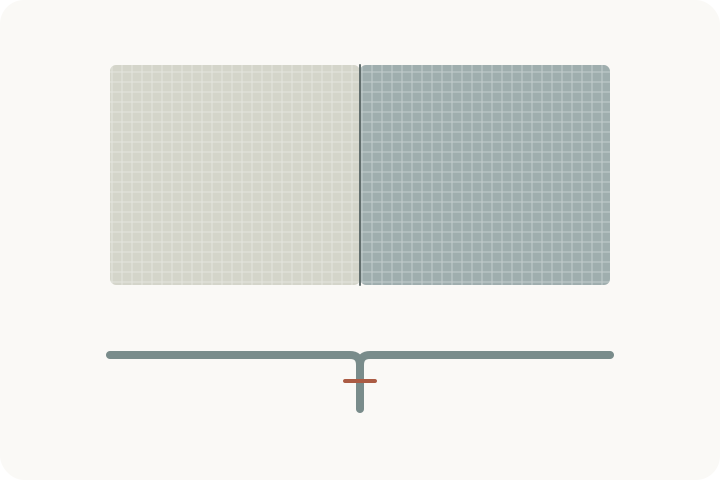
Joins and topstitching

Joins and topstitching

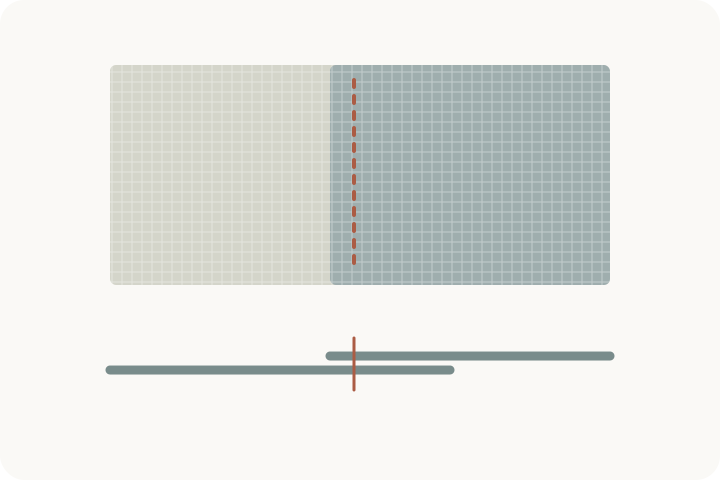
Plain seam

Not to scale · view and section where applicable

Two overlapping pieces are joined near the edge, then opened to form the surface. The allowance remains underneath.

Applications
Discreet joins in sofa, armchair and cushion covers.
Selection and detail
Allowance width and stitch depend on fabric and loading; test yarn slippage beside the join.
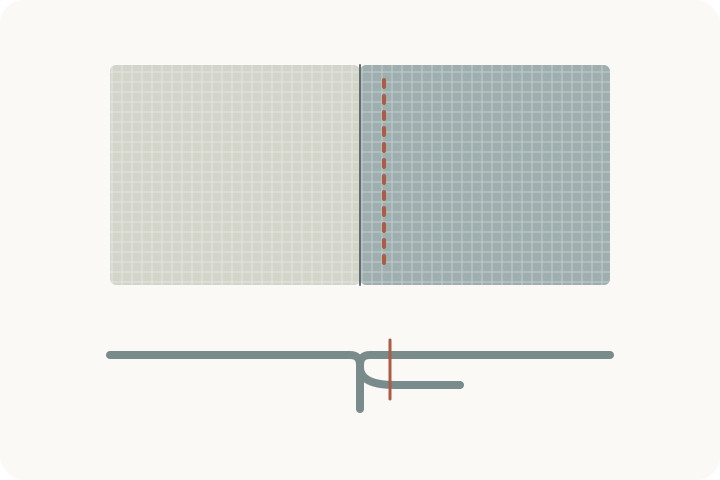
Joins and topstitching

Single topstitch

Not to scale · view and section where applicable

After joining, one visible stitch line holds the allowances to one side and defines the outline.

Applications
Linear detailing on sofas, armchairs and cushions.
Selection and detail
Contrast and distance from the join change the effect; extra needle holes require care on coated fabrics.
Joins and topstitching

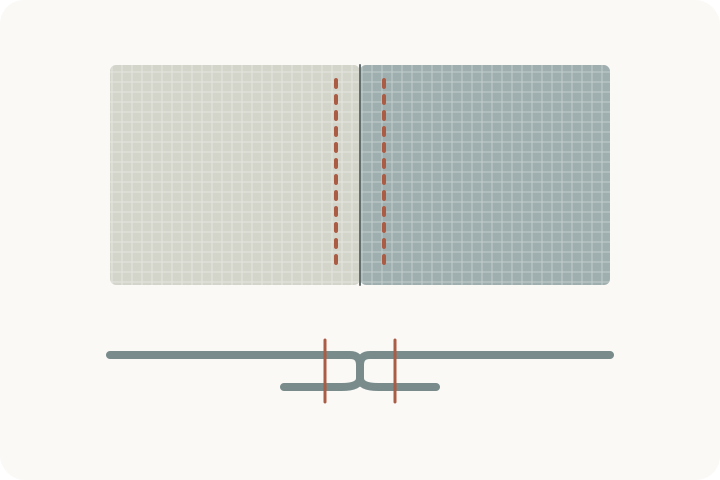
Double topstitch

Not to scale · view and section where applicable

Two visible stitch lines flank the join, with the allowances opened underneath.

Applications
Upholstery with symmetrical detailing and defined contours.
Selection and detail
Two rows do not guarantee greater strength: material, thread, stitch and seam testing remain decisive.
Joins and topstitching

Lapped seam

Not to scale · view and section where applicable

One piece overlaps the other and stitching crosses the shared area. Edges may be folded, depending on the variant.

Applications
Covers and panels requiring a flatter join or a controlled edge.
Selection and detail
Specify the variant; a lapped seam is not automatically a fully enclosed flat-felled seam.

Edges and finishes

Edges and finishes

Bound edge

Not to scale · view and section where applicable

A binding tape wraps around the material edge and is stitched in place, covering the cut edge.

Applications
Visible edges on cushions, covers and textile panels.
Selection and detail
Match the tape to curves, thickness and cleaning. Binding is flat; piping contains a cord.
Edges and finishes

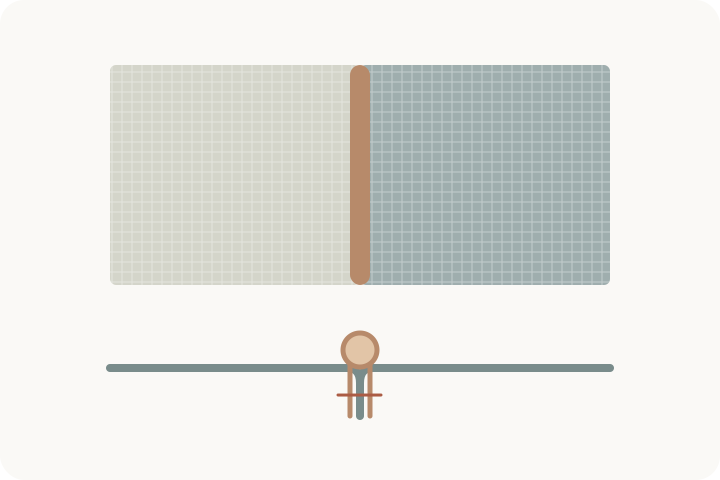
Corded piping

Not to scale · view and section where applicable

A fabric strip wraps a cord and is inserted between panels, creating a raised continuous outline.

Applications
Cushion, seat and backrest outlines, in matching or contrasting finishes.
Selection and detail
Match cord and covering to the use; outdoors, consider drying and thread exposure.
Edges and finishes

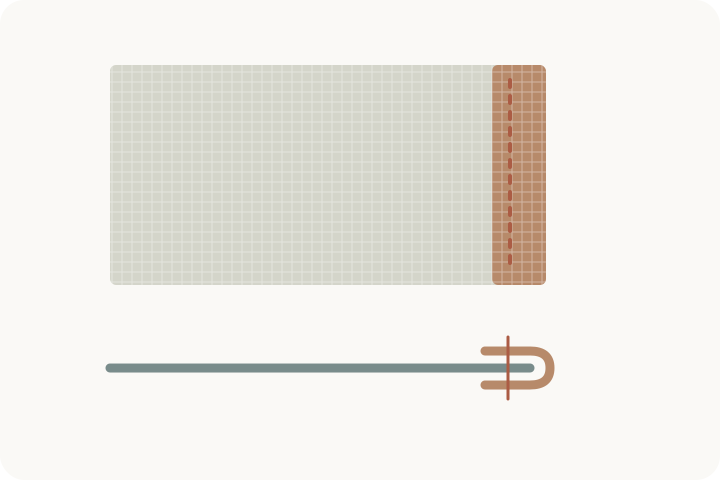
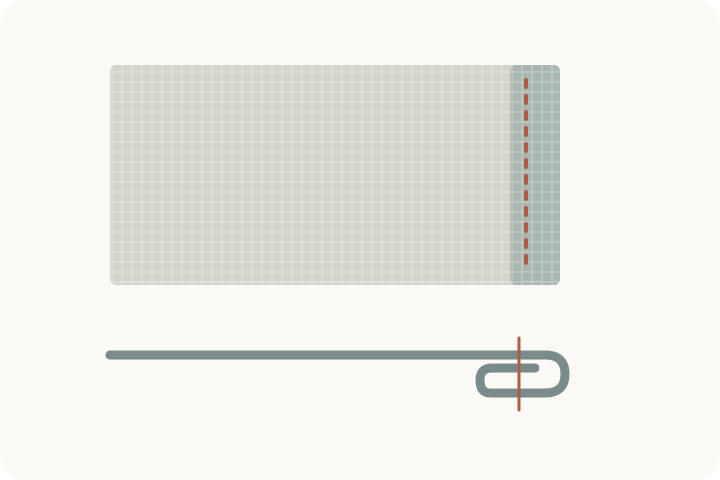
Folded hem

Not to scale · view and section where applicable

The edge is folded back and secured, with one or two folds to conceal the cut edge.

Applications
Cover edges, sofa skirts, curtains and decorative textiles.
Selection and detail
Folds add thickness; assess bulk, drape and behaviour at corners.
Edges and finishes

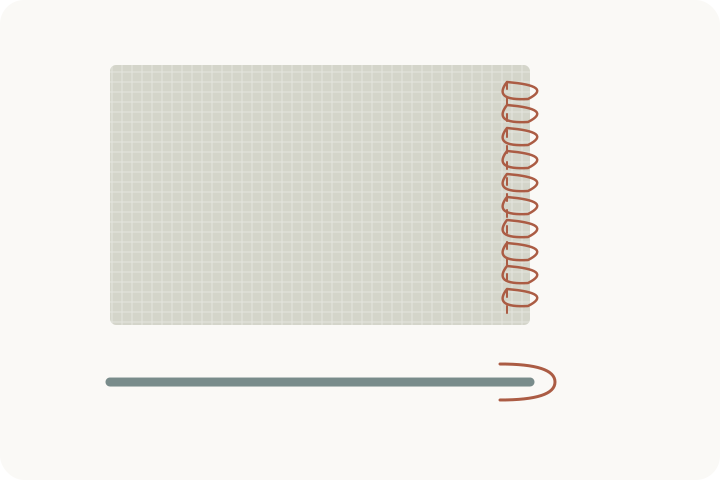
Overlock edge finish

Not to scale · view and section where applicable

Thread loops wrap the cut edge to limit fraying. This is an edge finish, not a guarantee of a load-bearing join.

Applications
Inside allowances on fraying fabrics, before or after the main joining seam.
Selection and detail
Select the stitch and configuration for the material; it does not automatically replace the load-bearing seam.

Closures and relief

Closures and relief

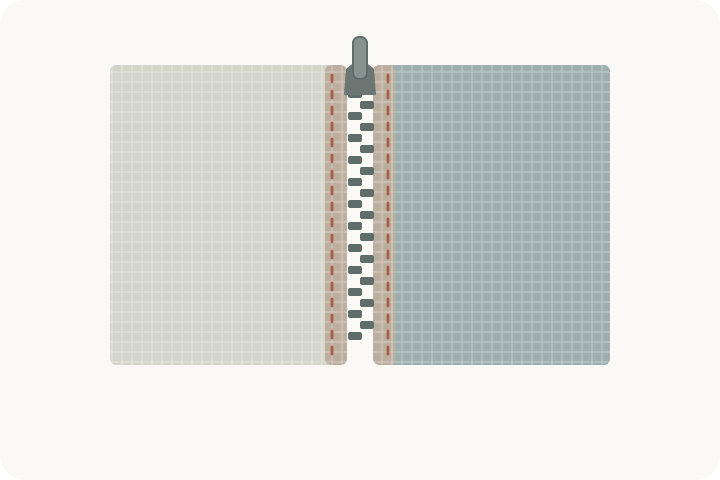
Zip closure

Not to scale · view and section where applicable

Two tapes with interlocking elements are sewn to the opening and joined by a slider.

Applications
Removable cushion, seat and backrest covers, allowing access to the filling.
Selection and detail
Size the opening and strength appropriately; check cleaning and outdoor suitability. A zip is not inherently waterproof.
Closures and relief

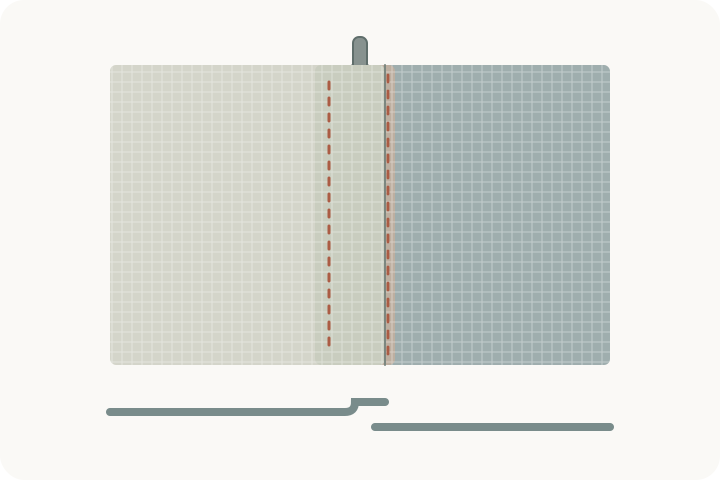
Lapped zip closure

Not to scale · view and section where applicable

A fabric flap covers the zip to reduce its visual presence. This is different from an invisible zip.

Applications
Removable covers with a discreet opening on the underside or back.
Selection and detail
The flap must allow the slider to move without catching fabric; it does not make the opening watertight.
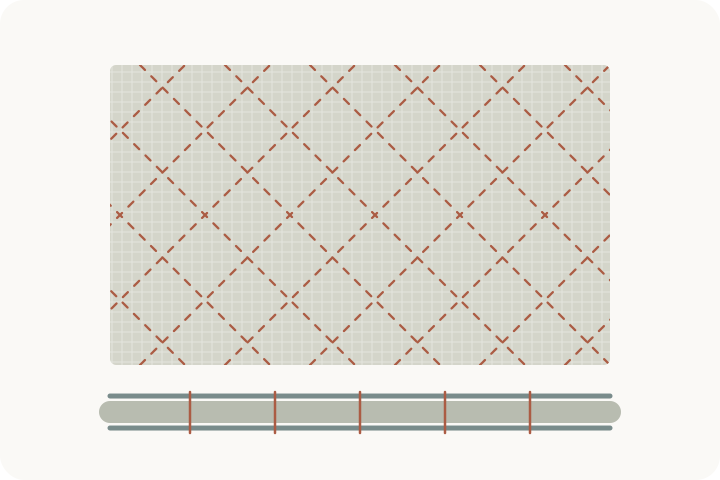
Closures and relief

Stitched quilting

Not to scale · view and section where applicable

Stitch lines pass through fabric and padding, creating channels or patterns and keeping layers together.

Applications
Headboard panels, backrests and cushions with controlled relief.
Selection and detail
A multilayer construction: match padding and pattern to comfort and cleaning, without assuming waterproofness.
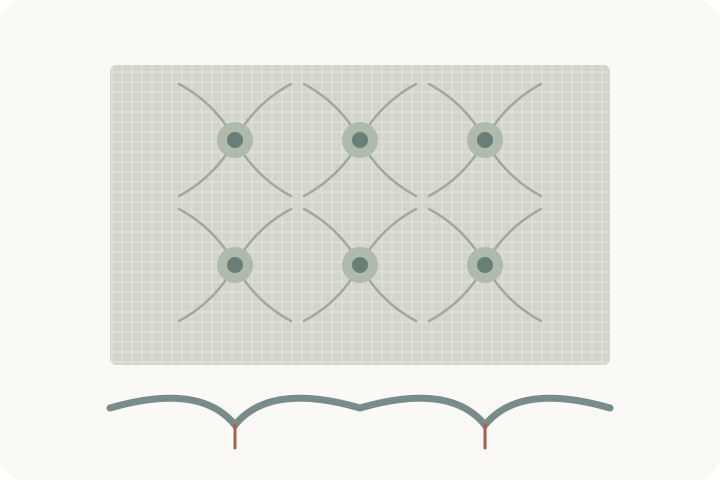
Closures and relief

Button tufting

Not to scale · view and section where applicable

Fixing points draw the covering into the padding, creating depressions and folds. This is an upholstery finish.

Applications
Headboards, sofa backs, armchairs and ottomans with sculpted detailing.
Selection and detail
More than decorative stitching: geometry depends on fabric, filling and support. Folds need care during cleaning.
Guides to help you chooseKey distinctions to guide your choice.

Know before choosing

Details make the difference.

Compare construction, use and finish.

01

Seam and stitch differ.

The join
The seam joins; the stitch forms the thread pattern; the finish defines the detail. Explore upholstery joins, edges, closures and relief with construction diagrams.
The stitch
301 lockstitch and 401 chainstitch form threads differently. The suitable stitch depends on fabric and seam.
02

Binding or piping?

Bound edge
A binding tape wraps around the material edge and is stitched in place, covering the cut edge.
Corded piping
A fabric strip wraps a cord and is inserted between panels, creating a raised continuous outline.
03

Outdoors needs more.

Fabric and thread
The diagrams show construction principles, not scale. One seam may use different stitches, such as 301 lockstitch or 401 chainstitch. Match fabric, thread, needle and loading. Outdoors, check thread resistance to UV and moisture; stitched needle holes do not make an item waterproof.

#218Concept

Shall we choose together?

Space, sunlight, moisture, comfort and maintenance help us find the right combination for your project.

The diagrams show construction principles, not scale. One seam may use different stitches, such as 301 lockstitch or 401 chainstitch. Match fabric, thread, needle and loading. Outdoors, check thread resistance to UV and moisture; stitched needle holes do not make an item waterproof. Images help explore details; they do not replace product references and specifications.

Seams and finishes

Guides to help you choose

Seams and finishes